This week was Father's Day in the U.S., and our children's cells get in on the act. This week, Sister Anita's 4-9 year old cell group was highlighted at our Sunday service. They made a special presentation for all the father's in attendance, giving them a gift of The Bible Promise Book. The pastors also received special Father's Day cards.
The kids then led the congregation in some worship, singing the Desparation Band's "Counting on God.
Posted byMichael J Mahoney
at
7:16 AM
Labels:
children,
Events,
family,
relationships

This weeks lesson in our series on John takes us right to the gates of Jerusalem - and right to the beginning of the Passion, or events and suffering of Christ leading up to the Crucifixion.
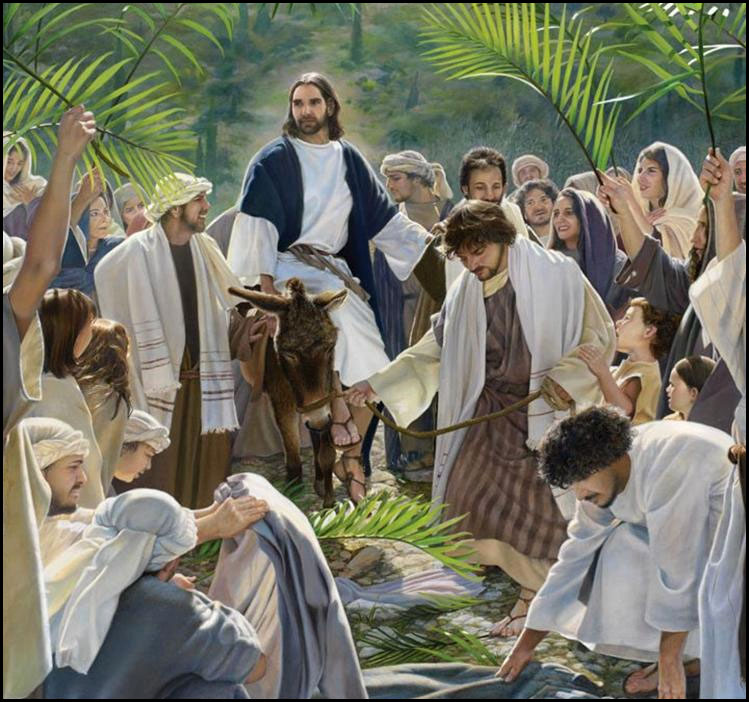
John 12 tells us about Jesus's entry into Jerusalem. Historically, we know why: Jesus was coming to Jerusalem to celebrate the Passover. Custom required that all Jewish families travel to Jerusalem to celebrate this solemn festival. He rode into Jerusalem on a donkey, which (according to tradition) is the way the Messiah would enter Jerusalem.

Here begins the events that lead up to Jesus' death on the Cross. The Triumphal Entry takes place on what we celebrate as Palm Sunday. The countdown of Holy Week then begins.
The next few weeks will focus on the Passion, and the events surrounding Holy Week.
Posted byMichael J Mahoney
at
7:01 AM
Labels:
Easter,
John,
passion

This week continues our look at the Gospel of John. Last week, we looked at the story of Lazarus, Jesus' last and greatest miracle before the Resurrection. John
continues to tell us the story of the family of Lazarus, and his sisters, Mary and Martha.
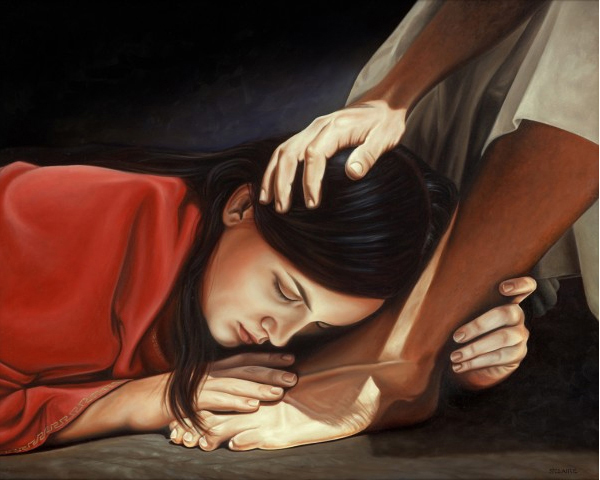
Mary - who has shown her devotion to the Lord before - instead of helping Martha with the meal, takes a large flask of expensive oil, and annoints Jesus, wiping His feet with her long hair. While history might debate the identity of this woman, one thing is clear: she uses a tremendously expensive amount of oil on this gesture. Judas states that the oil was worth 300 denarii, or a man's wages for a year.
There are a couple of things to take away. One is that Judas didn't really care about the poor, as he states in the text. Judas was the groups treasurer, and John reports that he was skimming from the cashbox. He wanted more money to cover his stealing.
Also, this is a very symbolic moment, as this annointing was usually done for the dead. This is a foreshadowing of what is going to happen to Jesus.
More important, though, is what Jesus says in verse 8: "For the poor you have with you always, but Me you do not have always.”
He was telling us to spend time with God before it's too late. While God is always present, our days are numbered. Tomorrow is never promised, so don't delay in spending time with Jesus.
Posted byMichael J Mahoney
at
12:17 PM
Labels:
anointing,
death,
John,
Lazarus,
relationships

Summertime is fast approaching. Things move along so quickly, it's hard to keep up sometimes. Last week was Fifth Friday, and though we usually do something fun, this time we just let everyone enjoy the weekend.
This week was an interesting topic. As we continue our journey through the Gospel of John, we come upon the story of Lazarus. Now, many people know the story of old Lazarus, and how he rose from the grave at Jesus' command. But have they really looked at it.
Lazarus of Bethany (as opposed to Lazarus the beggar) was, of course, a good friend of Jesus. Lazarus and his sisters, Mary and Martha, can be found in the Gospels as the people that Jesus often visits when he comes to Jerusalem. The story of Lazarus is (aside from the Passion) John's longest single story. The miracle of Lazarus is the reason people lined up to see Jesus when He entered Jerusalem, and could have been the final straw that caused the Sanhedrin to seek His death.
It is reported to Jesus that his friend Lazarus is ill. Jesus did not go right to Bethany, but waited. When He finally got to Bethany, He was told Lazarus had been dead for four days. Then He said something to the effect of "I'm glad I wasn't here,l because now you can believe." He then gives his famous quote in John 11:25-26:
I am the resurrection and the life. He who believes in Me, though he may die, he shall live. And whoever lives and believes in Me shall never die. Do you believe this?”
John 11 also contains verse 35, which (in the KJV and NKJV) simply says:
Jesus wept.
What a tender moment! Here is the Savior of the World, sharing in His full humanity by shedding tears for his fallen friend. Or perhaps, for all of us?
A memorable part of the story is when Jesus orders the stone to be rolled away, and Martha (always the practical one) says that Lazarus must really stink by now. After all, he's been dead in the hot desert for four days. But Jesus us undeterred, and calls Lazarus forward.
Of course, this demonstrates Jesus' authority over death, an authority He would soon be using to raise himself from the grave.
Posted byMichael J Mahoney
at
7:34 AM
Labels:
death,
John,
Lazarus
This week, we had a special guest leader for the 10-12 cell group - Shannon.
The lesson this week was a simple one. The story comes out of our continuing study of the Gospel of John. In this case, we were reading from Chapter 8. In this story, a woman is brought before Jesus who has been caught out in a terrible sin - one for which the scriptual penalty is death by stoning.
Jesus basically says "You're right. I tell you what. Whichever of you has never sinned, you throw the first stone. " John tells us the men all felt guilty, and one by one, they left Jesus and the woman alone.
Notice that while the men walked (ran!) away in shame of their sins, the woman did not. She faced the consequences of her actions. Jesus then asked her (in paraphrase) "Where did they all go? Is there anyone left to condemn you? No? Then I won't either. Go try and do better to not sin."
God doesn't care what others say about you. He doesn't expect perfection. He only cares about your heart, and that you try to stay away from sin as hard as you can. Don't worry about others' sins - worry about your own.
Posted byMichael J Mahoney
at
8:21 AM
Labels:
forgiveness,
John
This week we had a talk about sibling rivalry. Specifically, we talked about Joseph and the relationship he had with his brothers.
After reading about Joseph in Genesis, we were amused to find he was (in the words of the kids) a rat. A snitch. He dropped dime on his brothers when they goofed off.
His dad liked him best. A little Daddy's boy!
And apparently God liked him better, too. After all, God gave him dreams.
So Joseph's brothers did what any self-respecting older siblings would do. They slapped little Joseph around, threw him in a well, and sold him into slavery.
Years later, when Joseph was a powerful man and his brother's were in need, he had the chance to repay them. Did he? Of course not. Joseph showed his brother's love after what they had done. Does time really heal all wounds? Or does God?
What do you think?
Posted byMichael J Mahoney
at
1:46 PM
Labels:
forgiveness,
healing,
relationships

This week at GLCCKidz, we took a good look at the Parable of the Sower.
Luke 8:4-8,11-15. This is parable is unusual in that Jesus right away goes to explain it. Why? It could be because this is a very important lesson, and he wanted his disciples to be sure to get it right.
In the story, Jesus describes how a sower scatters seed on the ground. Some of the seed lands on the path, some on a rock, some in the thorns and some on good ground. We can draw some conclusions from understanding that the seeds represent the Word of God.
- The seeds that fall on path are taken by birds. This represents those who hear the Word, and want to respond to it, but they are distracted by things of the world. The devil literally comes and steals the Word from their hearts. These people fall prey to all the disc traction and lies that the crafty devil can throw at them.
- The seeds that fall on the rock grow and die. This represents people who hear the Word, and are joyful; but since the Word really did not take root, it soon dies within them. Maybe you know someone like that, someone who seemed on fire for God, but then that fire faded.
- The seeds that fall in the thorns grow, but are choked. These are the folks who allow the Word to be choked by worries, seeking after riches and looking for life's pleasures. There's nothing wrong with wanting comfort. But when it takes the place of God in our lives, the Word then gets choked off. God does not desire that we spend our days worrying about problems or about what we will get; rather we should seek after Him.
- The seed that falls on good ground grows, multiplies and bears fruit. A healthy plant will grow strong and will bear fruit - flowers, food, whatever. It will continue to multiply. That's how you know it's healthy.
We need to be sure that the Word is firmly planted in the "good and fertile soil" of our hearts.
Posted byMichael J Mahoney
at
7:04 AM
Labels:
evangelism,
Satan,
word